Private label & OEM
Your brand on the box.
Ours on the outcome.
A house brand is the most reliable way to hold margin against the buying groups — but only if the product behind it holds up.
Why own the range
You cannot discount your way out of a shared price list.
If you sell the same branded product as everyone else, the only lever you have is price — and someone will always pull it harder.
An own-brand range changes the question. The customer can no longer compare your SKU line-for-line against three other retailers, the margin is set by what the range is worth rather than by a distributor’s schedule, and the equity you build belongs to you rather than to the brand you were reselling.
The risk is equally plain: it is your name on the product when something fails. Which is why the specification and inspection work matters more here than anywhere else we operate.

The program
Everything between an idea and delivered stock.
Range architecture
What the range should be
Which categories, how many SKUs, at what price points, and where the range sits against what you already sell. A private label range that cannibalises your existing margin is not a win.
Specification
Written to your positioning
Materials, finishes, hardware and tolerances chosen to match the price point you intend to hold — not defaulted to whatever the factory runs.
Factory selection
Matched, then quoted
Shortlisted from the network on demonstrated capability for your category and volume, with quotes across the shortlist rather than a single number.
Tooling
Moulds and sign-off
Golden samples assessed and approved before tooling is cut. Where a design is exclusive to you, the tooling arrangement is agreed in writing up front.
Packaging
Carton, print and marking
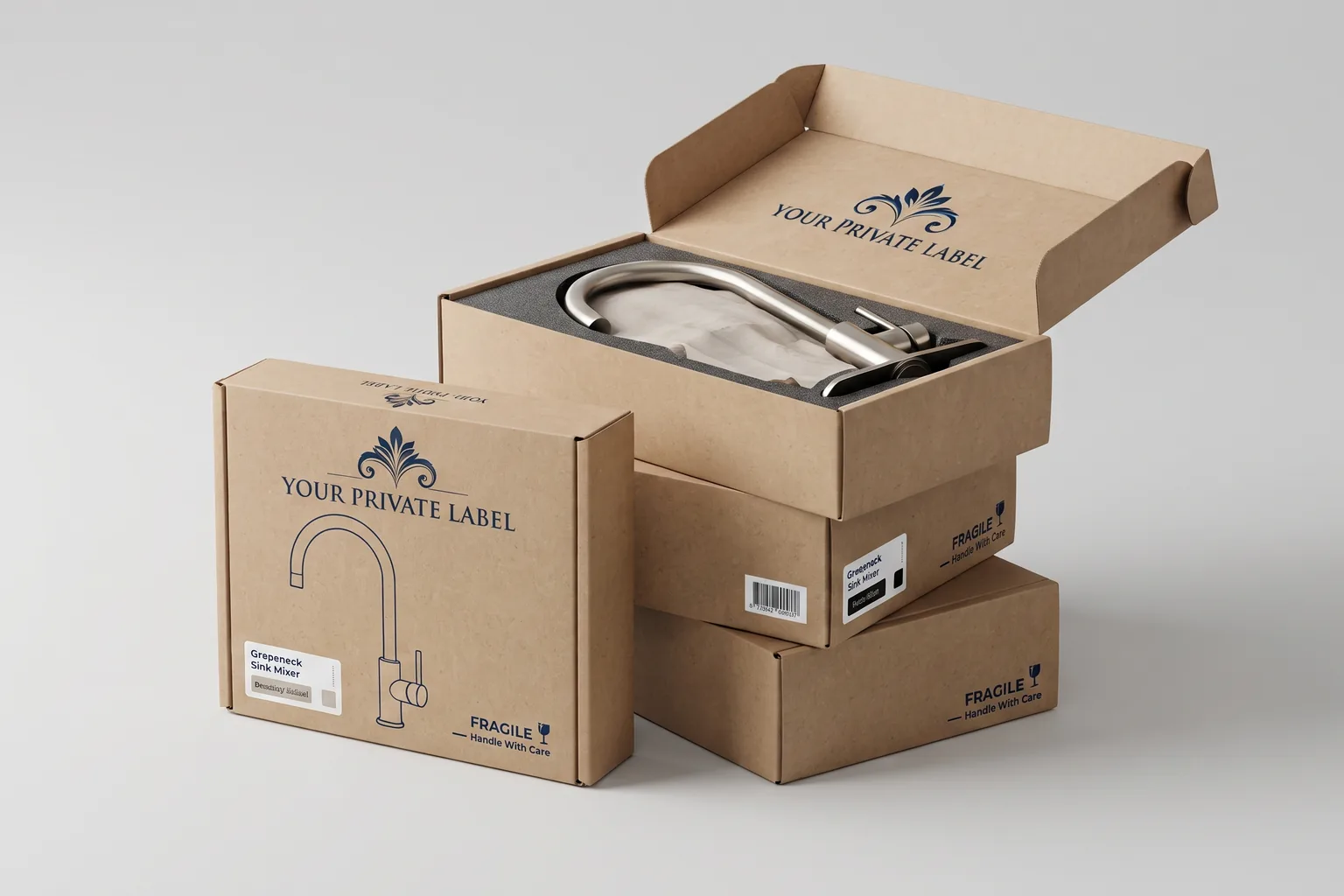
Retail packaging designed and produced to your brand, with carton marking and barcoding set up for your warehouse rather than the factory’s.
Certification
Registered in your name
We hold the WaterMark licence, so you do not need your own. WELS can be registered in your name or ours. This is the part most first-time private label programs underestimate — and the part that strands containers at the border.
Worth knowing
Private label is not always the right answer.
It works when you have consistent volume, a market position worth reinforcing, and the working capital to hold stock. It works badly when volumes are thin or unpredictable — tooling and certification are fixed costs that have to be spread across units, and a slow-moving own-brand range ties up cash that a distributor’s stock would not.
If your numbers do not support it, we will say so. Sourcing an existing factory model under your own purchase order is often the better first step, and it leaves the private label option open once the volume is proven.
The margin is not in the discount. It’s in owning the range.
Sortex — Direct Sourcing Specialists