

The problem: You’ve built real trade relationships and a loyal customer base, and you’re tired of selling the same national brands every competitor down the road also stocks. A house brand — your name on the box, your margin instead of a distributor’s — looks like the obvious next move. Then you start looking into what it actually takes, and it stalls: minimum order quantities that look built for a business ten times your size, no idea which factory to trust, and a compliance process (WaterMark, WELS) you’ve never had to manage yourself because it’s always been someone else’s problem.
That’s usually where private label plans quietly die — not because the retailer doesn’t have the demand for it, but because the path from “I want a house brand” to “I have compliant stock on my shelf” isn’t obvious, and nobody selling you the idea explains the actual steps.
It’s worth being upfront about why this matters more than it might seem. A trade plumbing store selling a national brand is typically working with a margin the distributor sets and protects — you have very little room to move on price without eating into your own return. A house brand flips that. You’re setting the margin, which means you can be more competitive on a quote to win a job and still come out ahead, or hold your price and take the extra margin straight to the bottom line. That’s the actual prize here, not just “having your own brand” for its own sake.
Why this looks harder than it needs to be
Most of what makes private label feel out of reach is a handful of assumptions that aren’t quite true for a business your size:
“MOQs are fixed and huge.” Minimum order quantities are set by the factory, but they’re negotiable against the product’s complexity and your order consistency — and they can also be met through consolidation, where your volume combines with other orders on the same production run instead of you filling a container alone. A retailer doing solid trade volume across a season is closer to workable MOQs than most people assume before they ask.
“You need to already know a factory.” This is the actual blocker for most people, and it’s a fair one — vetting a factory from Australia with no existing relationship is genuinely difficult (worth reading our piece on spotting a real factory versus a trading company if you haven’t already). But it’s a solvable problem with the right partner, not a reason the whole idea is off the table.
“Compliance is a wall, not a step.” WaterMark and WELS feel intimidating mainly because retailers have never had to manage them directly — a distributor always handled it. It’s a real process with real requirements, but it’s a known process. It doesn’t need to be reinvented for your range; it needs to be run correctly, once, per product.
“Private label means betting the business on one big range.” It doesn’t have to start there. Most successful house brands start with two or three high-turnover lines — a mixer tap range, a toilet suite, a basin — not a full catalogue on day one.
“It has to look different to everything else on the market to be worth it.” Not necessarily. The margin gain from private label comes from cutting out the distributor layer, not from reinventing the product. A well-made, compliant, competitively priced version of a product your customers already buy is a perfectly good place to start — the differentiation can come later, once the first range is proving itself.
Private label vs white label — which one you’re actually doing
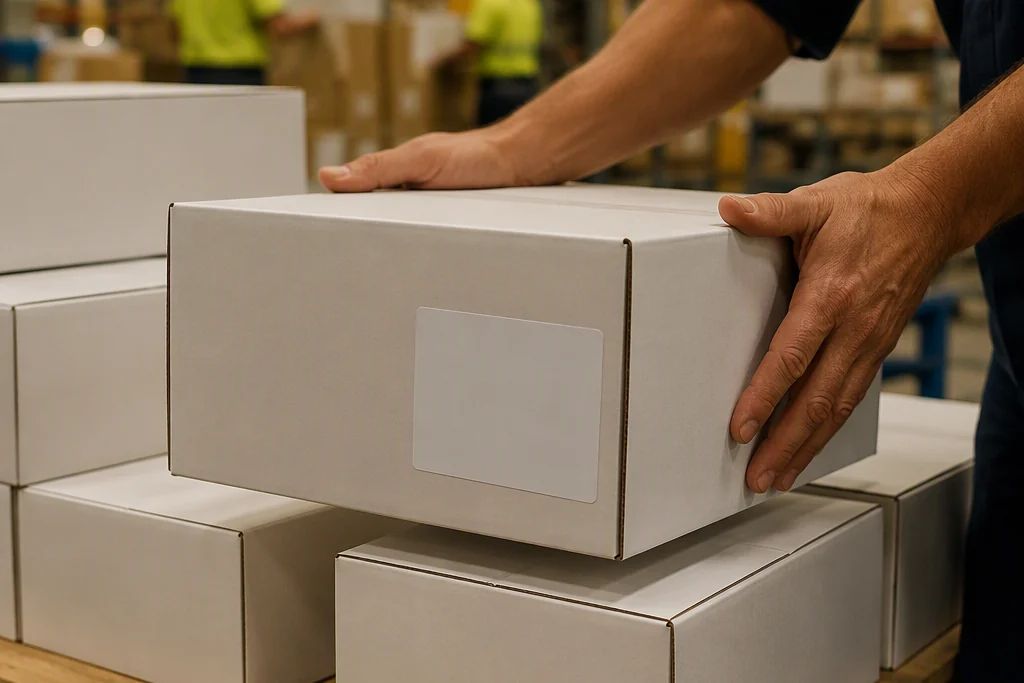
These two terms get used interchangeably, but the distinction matters for how much control you have. White labelling means taking an existing product already in a factory’s catalogue and putting your branding on it — fastest to market, lowest cost to set up, but you’re working within what the factory already makes. Private label (in the fuller sense) means specifying your own configuration — a particular finish, a specific valve or cartridge, a design tweak — built to your brief rather than picked off a shelf.
Most retailers starting out are better served by white labelling their first one or two products. It gets stock on the shelf faster, with a smaller compliance and tooling lift, and it tells you whether the demand and the margin are real before you invest in a more customised private label range. You can move toward true private label on your second or third product once you know the first one sells.
The actual pathway
1. Pick the product, not the whole range. Start with whatever you sell the most volume of already, where a national brand’s margin is the biggest gap between what you pay and what you charge. That’s usually tapware or a toilet suite line for a trade plumbing store, or a basin/vanity combination for a retail bathroom showroom.
2. Confirm the compliance pathway before you confirm the product. Work out whether your chosen product line needs WaterMark, WELS, or both, and confirm what testing and certification will actually be required for your specific spec — before you fall in love with a finish or a design that turns out to be a compliance headache.
3. Get the factory relationship right, not just the quote. This is where MOQ negotiation, quality control, and ongoing production consistency actually get decided. A cheap first quote from an unverified supplier is the single most common way a private label launch goes wrong in year one.
4. Run a real pre-shipment inspection on the first order. Your name is now on the box. A quality issue that would have been a supplier’s problem before is entirely yours now — including whatever it does to a trade customer’s trust in your brand going forward.
5. Plan your second order before your first one lands. Private label only pays off on repeat volume. Knowing your reorder timeline and lead time before you’re caught short on stock is what turns this into a margin improvement instead of a one-off experiment.
6. Decide how you’re actually going to sell it. A house brand needs its own packaging, its own product code in your system, and a clear answer for the trade customer who asks “who makes this?” Some retailers lead with the brand story, others quietly let the product perform on price and quality without making a feature of where it comes from. Either works — but decide before launch, not after a customer asks and your staff don’t have a consistent answer.

A realistic timeline
Worth setting expectations here, because private label is not a fast play. From choosing a product to having compliant stock on the shelf, a realistic timeline looks something like:
- Weeks 1–3: Product selection, compliance pathway confirmed, factory shortlisted and verified
- Weeks 3–6: Sample requested, reviewed, and — if needed — a second sample round after feedback
- Weeks 6–8: Order placed, WaterMark/WELS testing and registration finalised against the confirmed spec
- Weeks 8–16: Production, pre-shipment inspection, freight and customs clearance
Three to four months from decision to stock on shelf is a reasonable expectation for a first product, longer if the sample round needs a second pass or the compliance testing throws up a spec change. Retailers who go in expecting a six-week turnaround are usually the ones who cut a corner somewhere to hit a date — which is exactly the wrong place to save time.
What it costs to get this wrong
The retailers who regret going private label almost never regret the idea — they regret skipping step 2 or step 3. A range that gets held up at customs because certification wasn’t confirmed upfront, or a first shipment with a quality issue that goes straight onto a trade customer’s job site with your name on it, does more damage to the relationship you’re trying to build than staying with a national brand ever would have.
Where this leaves you
Everything above is doable without owning a factory relationship yourself, but steps 2 through 4 are exactly where a first-time private label retailer needs someone who’s already run this process — someone who knows which factories can actually hit your MOQ without cutting corners, and who manages WaterMark and WELS as a normal part of the job rather than a thing to figure out mid-launch.
That’s the gap we sit in for private label specifically. If you’ve got a product in mind and you’re trying to work out whether the volume and the margin actually stack up, that’s a conversation worth having before you request your first quote.
Sortex helps trade plumbing stores and bathroom retailers build private label ranges direct from verified factories across Australia, New Zealand and Southeast Asia, with WaterMark and WELS compliance managed in-house. Get in touch to talk through a program.