

The problem: You want factory-direct pricing on bathroomware or tapware, so you go looking for a factory. What you usually find is a very convincing website, a sales rep who answers fast, product photos that look legitimate, and a quote that seems fair. What you often don’t find out until much later is that you’re talking to a trading company — a business that buys from factories and resells to you at a markup, while presenting itself as the factory itself.
This isn’t rare, and it isn’t always dishonest in the way people assume. Plenty of trading companies genuinely do good work sourcing and managing production. The problem is the pricing, the accountability, and the quality control — you’re paying for a layer you don’t know exists, and when something goes wrong, you’re negotiating with someone who doesn’t control the factory floor.
Why this is so hard to spot from Australia
Alibaba, trade platforms and even direct outreach make this deliberately hard to tell apart, because there’s no real cost to a trading company calling itself a “factory” in an email signature or listing title. A few things make it worse:
- Trading companies often operate out of the same industrial cities as real manufacturers, so an address alone doesn’t confirm anything
- Product photography gets reused or licensed from the actual factory, so the images look authentic because they are — just not necessarily of who you’re talking to
- English-speaking sales staff and fast communication are more common at trading companies than at factories, so responsiveness actually points the wrong way
- A trading company can absolutely arrange a “factory visit” — to a factory they buy from, not one they own — and you’d have no way to know the difference on the day
None of this means every fast-responding, well-presented supplier is fake. It means none of those signals tell you anything useful either way.
What actually confirms you’re dealing with a factory
Ask for the business licence and check the registered scope. Chinese business licences list the company’s registered business activities. A genuine manufacturer’s licence will show production/manufacturing in its registered scope. A trading company’s licence typically shows trading, import/export, or wholesale — and won’t list manufacturing at all. This is a five-minute check that most buyers never make.
Ask specific production questions a trader can’t answer. Things like: what’s your daily output on this product line? What brand of press/mould equipment do you run? Can you send a video of this specific order in production, not a generic factory tour? A real factory answers these without hesitation. A trading company either stalls, gives vague answers, or passes the question along and comes back a day later — which tells you where the actual knowledge sits.
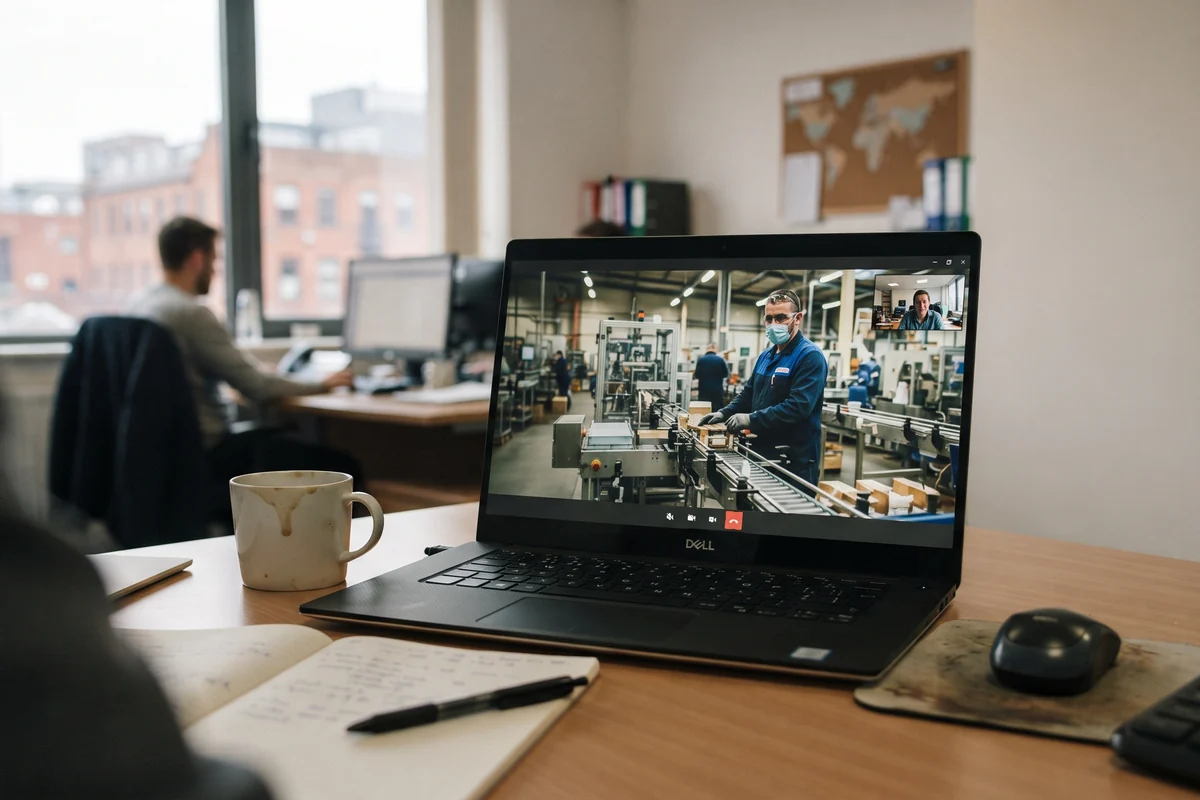
Request a video call onto the factory floor, not a scheduled visit. A scheduled visit can be staged. An unscheduled or lightly-scheduled video walkthrough of the specific production line, on request, is much harder to fake convincingly — and a genuine factory won’t push back hard on this.
Check the export history. Factories with a real manufacturing track record usually show up in customs and shipping records tied to their business name, with consistent product categories over time. Trading companies’ shipping records often show a wider, more scattered mix of products than a factory that specialises in one category would produce.
Notice who negotiates on technical spec vs. who negotiates on price. A factory will push back on a technical change — a wall thickness, a finish, a component swap — because it affects their production line. A trading company negotiates almost entirely on price and delivery, because that’s the part of the deal they actually control.
What it costs you if you don’t check
None of this is really about being deceived on price, even though the markup is real. The bigger cost is control. If a batch comes through with a quality issue, a genuine factory relationship gives you someone who can actually fix the production line. A trading company relationship gives you someone who has to go back and ask — and who has no real leverage to insist on a fix, because they don’t own the equipment or the workforce. Disputes take longer, accountability gets diffused, and you find out how thin the relationship actually was exactly when you need it to be solid.
Where this leaves a first-time importer
Doing all of the above properly — licence checks, export history, unscheduled video verification, technical negotiation — takes real time, and it’s genuinely hard to do well from Australia without someone on the ground who knows what a real answer looks like versus a well-rehearsed one. Most retailers and builders don’t have the bandwidth to run this process for every supplier they’re evaluating, and getting it wrong once is usually enough to make the whole idea of sourcing direct feel too risky to try again.
This is the exact gap we sit in. We’ve already done the factory verification work across our supplier network — licence checks, production audits, ongoing relationship, not a one-off visit — so you’re not starting that process from zero or hoping a video call tells you enough. If you’re weighing up going direct yourself versus having someone who’s already done the vetting, it’s worth a conversation before you commit to either path.
Sortex sources bathroom sanitaryware, tapware and kitchen sinks direct from verified factories across Australia, New Zealand and Southeast Asia — no trading company markup, no guesswork on who’s actually making your product. Get in touch to talk through a program.
[…] from Australia with no existing relationship is genuinely difficult (worth reading our piece on spotting a real factory versus a trading company if you haven’t already). But it’s a solvable problem with the right partner, not a […]
[…] Finding and vetting factories. Telling a genuine manufacturer from a trader using a factory’s name takes time and a good eye. We cover that in how to tell a real factory from a trading company. […]